
Outdoor print advertising maintains a cost per thousand impressions of just $3.56 in 2026, which is the lowest rate across all advertising mediums. To capitalize on this value, it's vital to follow banner design best practices for readability so your message isn't lost to poor contrast or blurry text. We know how stressful it feels to invest in a large display only to worry that the final product might be unreadable or plagued by technical issues like banding.
It's a common concern for business owners and school administrators who need a professional result that represents their brand accurately without wasting their budget. At our Riverside facility, we use high-definition printers and odor-free, water-based Latex inks to ensure your text is crisp and your colors are vibrant. By printing with the power of the sun through our on-site solar panels, we provide wholesale pricing and superior quality control that brokers simply can't match.
We'll walk you through the specific math for font sizes, explain the 2010 ADA Standards for Accessible Design, and provide a clear checklist for your next project. You'll gain the confidence to submit files that result in a sharp, professional 13 oz. vinyl banner or fabric display every time.
Mastering Typography and Visual Hierarchy for Large Format
Effective banner design best practices for readability start with understanding how the human eye processes information at a distance. Unlike a digital screen, a Custom Vinyl Banner must remain legible while competing with environmental factors like sunlight and motion. We've seen many designs fail because they tried to include too much information, which leads to visual clutter. We recommend the "Less is More" rule: limit your banner to one primary message and a clear call to action to maximize impact.
- Sans-serif typefaces: Fonts like Helvetica or Arial are the industry standard for outdoor legibility because their clean lines don't blur together.
- White space: Leaving empty space around your text prevents the eye from becoming overwhelmed.
- Bold key details: Use bold weights for dates, phone numbers, or event names to ensure they pop against the background.
At our Riverside facility, we use high-definition printers and water-based Latex inks to ensure every character is sharp. By printing with the power of the sun through our 200+ solar panels, we maintain the quality control that third-party brokers can't offer. This in-house approach ensures your text doesn't suffer from banding or low-resolution artifacts.
Selecting the Right Typeface for Distance
Choosing a font isn't just about aesthetics; it's a technical decision. To comply with the 2010 ADA Standards for Accessible Design, we recommend sans-serif fonts for all distance-viewed signage. Script or highly decorative fonts often "bleed" together when viewed from 20 feet away, making your message impossible to decode. Proper kerning, or the spacing between letters, is equally vital. If characters are too close, they'll overlap in the viewer's eye. We suggest using consistent font weights to maintain a professional appearance that builds brand authority.
Establishing a Clear Visual Hierarchy
A successful layout uses Visual Hierarchy Principles to guide the viewer from the most important information to the supporting details. Place your headline in the largest font at the top or center. Use size and weight to lead the eye toward a single, direct call to action like a website URL or a phone number. If you're designing Large Format Printing projects for Southern California events, these principles ensure your 13 oz. vinyl banner delivers a high return on investment. Organizing your content logically prevents the "banner blindness" that occurs when a design is too busy to process quickly.
If you need assistance with a layout or have questions about Wholesale Banner Printing, call us at 951-684-3111 for a custom quote or visit our Riverside shop for rush orders.
The Science of Contrast and Viewing Distance
Designing for the Southern California sun requires a deep understanding of how light affects legibility. The most critical factor in banner design best practices for readability is the 1-to-10 Rule. This industry standard dictates that every 1 inch of letter height provides approximately 10 feet of readable distance. If your goal is to capture the attention of drivers in Riverside, your typography must be scaled to match their speed and distance. We often see designs fail because the creator prioritized brand-specific pastel palettes over the high-contrast pairings necessary for outdoor environments.
To verify your layout before printing, we suggest using the "Squint Test" or the "3-Second Rule." If you can't decipher the main message while squinting at your monitor from across the room, it won't work on a 13 oz. vinyl banner at a busy intersection. Our team in Riverside utilizes high-definition printers to ensure that these high-contrast designs remain sharp and free from the banding issues common with lower-quality equipment. By printing with the power of the sun through our on-site solar panels, we provide wholesale pricing without compromising the technical excellence required for Large Format Printing.
Optimal Color Pairings for Maximum Legibility
Contrast is the difference in luminance between the text and the background. Certain combinations are physically easier for the human eye to process from a distance. We recommend these pairings, ranked by their effectiveness:
- Black text on a Yellow background (Highest visibility)
- Black text on a White background
- Yellow text on a Black background
- White text on a Dark Blue background
We advise against "vibrating colors," such as red text on a blue background. These combinations cause visual fatigue and make the text appear to move, which is physically painful to read. For outdoor displays, we use UV-Cured inks for our sign printing to ensure these colors stay vibrant and don't fade under intense sunlight. This technology maintains the professional integrity of your Custom Vinyl Banners for longer durations.
Calculating Your Required Banner Size
Determining the right dimensions for your project involves simple math based on your audience's location. If your target viewer is 50 feet away, your primary lettering must be at least 5 inches tall to be legible. For viewers at 100 feet, you'll need 10-inch letters. This calculation often dictates whether you should choose a 10ft x 5ft vinyl banner or a more compact option. You can browse various sizing options for custom vinyl banners to find the best fit for your specific environment. Ensuring your message fits within these technical constraints is the best way to avoid wasting your budget on an unreadable sign.
If you have questions about which material is best for your location, call us at 951-684-3111 for a custom quote or visit our Riverside facility for rush orders.
Technical Excellence: How Print Quality Impacts Readability
We believe that even a perfect layout fails if the physical production is handled poorly. Following banner design best practices for readability requires a printer that maintains strict color calibration and sharp edges. Unlike brokers who outsource to the lowest bidder, we handle all production in our Riverside facility. This allows us to control every variable, ensuring the final print matches your digital file exactly. When we print your Custom Vinyl Banners, we're focused on technical precision that keeps your message clear from every angle.
Our commitment to quality extends to our environmental impact. We're proud to be printing with the power of the sun, using over 200 solar panels to run our high-definition equipment. Our team uses water-based Latex inks because they're odor-free and non-toxic, providing a professional finish that doesn't off-gas. These inks are specifically designed to be fade-resistant, which is vital for maintaining legibility in the intense Southern California climate.
Eliminating Banding with High-Definition Printers
Banding refers to distracting horizontal lines that appear when a printer's heads aren't aligned or are firing incorrectly. These lines break up letterforms and ruin legibility, making your Large Format Printing look unprofessional. We use high-definition printers that produce smooth gradients and crisp text edges to prevent this issue. For our flatbed and sign printing, UV-Cured inks are essential. They cure instantly under light, which prevents the ink from spreading on the material and ensures your small details stay sharp.
Material Choice and Environmental Factors
Readability isn't just about ink; it's about how the material behaves once it's installed. A standard 13 oz. vinyl banner is excellent for most displays, but we always recommend reinforced grommets to keep the surface taut. If a banner sags, the text becomes distorted and difficult to read. In high-wind areas, mesh banners are the better choice because they allow air to pass through, preventing the "sail effect" that can tear or ripple your display. For long-term outdoor projects, we suggest 18 oz. heavy duty vinyl to ensure the material doesn't curl over time. You can see our equipment page to learn more about the technology we use to achieve these results.
If you're ready to start your next project or need advice on the best material for your location, call us at 951-684-3111 for a custom quote. You can also visit our Riverside facility for rush orders and professional guidance.
Elevate Your Message with Technical Precision
Mastering banner design best practices for readability is a blend of mathematical font scaling and choosing the right technical specifications. We've explored how the 1-to-10 rule for letter height and high-contrast color pairings ensure your 13 oz. vinyl banners remain legible from a distance. By prioritizing visual hierarchy and selecting sans-serif typefaces, you've already solved the most common design pitfalls that lead to unreadable signage.
The final step is partnering with a team that understands the importance of in-house quality control. At our Riverside facility, we eliminate technical errors like banding by using high-definition printers powered by over 200 solar panels. Our water-based Latex inks provide a professional, odor-free finish that represents your brand accurately. Whether you need a 10ft x 5ft vinyl banner or a specialized mesh display, we handle every detail on-site to maintain wholesale pricing and fast turnarounds.
If you're ready to start your next project, get a professional quote for your custom banners or call 951-684-3111. You can also visit our Riverside facility for rush orders and expert advice. We look forward to helping you create a display that truly stands out in the Southern California landscape.
Common Questions Regarding Banner Legibility
What is the best font size for a banner readable from 50 feet?
For a banner to be legible from a distance of 50 feet, your primary text must be at least 5 inches tall. This follows the 1-to-10 rule, which is a core component of banner design best practices for readability. We recommend using bold, sans-serif fonts to ensure the characters remain distinct and don't blur together. If you're designing for high-traffic areas in Southern California, scaling your typography correctly is the most effective way to ensure your message is received by passing drivers.
Should I use CMYK or RGB for my banner design files?
You should always use the CMYK color profile for your banner design files to ensure accurate reproduction on our high-definition printers. While RGB is the standard for digital screens, Large Format Printing equipment utilizes Cyan, Magenta, Yellow, and Black inks to create images. Designing in CMYK from the start prevents unexpected color shifts during the production process. At our Riverside facility, we calibrate our equipment regularly to ensure your brand colors remain consistent across all Custom Vinyl Banners.
Why does my printed banner look different from the design on my screen?
The discrepancy occurs because computer monitors use backlit pixels to display colors, whereas printed banners rely on light reflecting off physical ink and material. Additionally, screens can display a wider range of colors than physical inks can replicate. We use non-toxic, water-based Latex inks and UV-Cured technology to achieve the highest possible vibrancy. Since we handle all Wholesale Banner Printing in-house and print with the power of the sun, we maintain strict quality control to minimize these variations.
Can I use a photo from my phone for a large format banner?
You can use a phone photo provided the file resolution is high enough to prevent pixelation when enlarged to the final banner size. Most Custom Vinyl Banners require images to be at least 100 to 150 DPI at their actual print dimensions. If an image is too small, the final result will look blurry or "blocky," which ruins professional readability. If you're unsure about your file quality, call us at 951-684-3111 or visit our Riverside facility for a file check before placing rush orders.
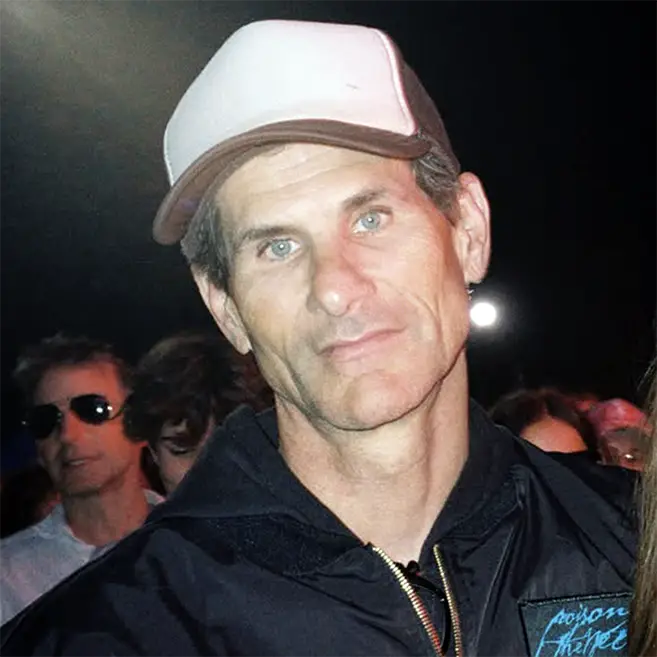
Article by
Derric Swinfard
Derric Swinfard is a pioneer in the specialty printing industry. As the founder of Monster Media Inc., he has spent over a decade pushing the boundaries of large-format production. His expertise spans across a diverse portfolio of premium print brands, including Woodsnap.com, Printsonwood.com, Plywerk.com, and Banner4Sale.com.
Operating out of his 100% solar-powered facility in Riverside, CA, Derric combines industrial-scale capability with artisan-level quality. Whether it’s high-durability vinyl for Banner4Sale or patented wood-printing technology, Derric’s mission remains the same: delivering flawless, American-made prints at wholesale speed.